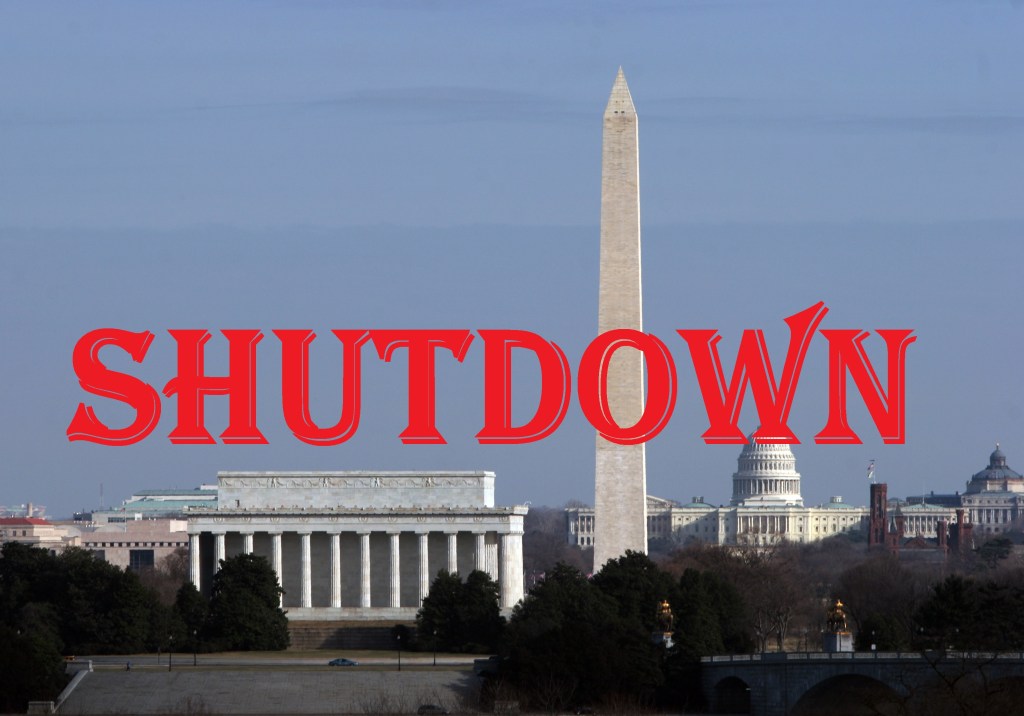
 At the start of its new fiscal year, October 1, 2013, the United States government shutdown affecting every government program, halting aid, services and forces closures and furloughs on government workers. The last time the government shutdown it was in the year 1995 and the conflict is eerily similar to what is taking place now.
The Republican Congress, led by Speaker of the U.S. House of Representatives Newt Gingrich, was concerned about funding for Medicare, education, the environment, and public health in Democratic President Bill Clinton’s 1996 federal budget. Clinton vetoed the spending bill the Republican Party-controlled Congress and the government shutdown for 21 days from November 14 through November 19, 1995 and from December 16, 1995 to January 6, 1996.
Today the U.S. enters into the second week of the government shutdown over Republican House members upset over Obamacare, or its official name, The Patient Protection and Affordable Care Act, which prevents those with pre-existing medical conditions from being denied health insurance, and makes it so that those who have health insurance will no longer have to indirectly pay for those who show up in emergency rooms uninsured. Although Social Security, air traffic control and active military pay has continued to be funded so far, funding agencies, paying out small business loans and processing passport requests have ceased despite Congress still reaping in its hefty paychecks, all of which is utterly irresponsible.
Here’s a better breakdown of who’s getting f#cked, I mean affected, by the shutdown.
The health care law isn’t even really directly tied to funding the government, but it’s being used as a bargaining chip. Sen. Ted Cruz of Texas and a group of Republicans believe the policy achievement is so bad for the country that it is worth disrupting government funding to undercut it completely disregarding any of the 800,000 government employees who actually need a paycheck to survive and feed their families in the process.
To add more fire to the pot, Brian Kessler, economist with Moody’s Analytics, estimated losses from a three- to four-week shutdown would cost the economy about $55 billion. The U.S. is also on the verge of maxing out its $16.699 trillion credit limit and the president must ask Congress to raise it before we hit the debt ceiling come October 17 and can no longer borrow money. The only sad part of it all is that the citizens of the United States drove to the polls and checked boxes to elect these officials who are not doing their job, or by not voting just let the same people fester in their publicly held positions.
See a very interesting allegory to the whole shutdown situation here.


 Jasmine in the wild
Leave a Reply