
 Writers of Kern Blogging Challenge (A-Z)
I was on the phone the other day with a friend who was talking about someone who had made some abhorrently racist remarks about a style of dress that was stereotypically attributed to those of African-American decent. The words being repeated by this friend from the original source over the phone to me were with no doubt terrible, but the discussion about how this friend viewed race, although not as distasteful, didn’t sound so great either.
She had told me that she didn’t “see” race, and that to her, race didn’t matter. The word sat for a while and I let the conversation continue, but something about hiding all the things that have occurred in the past and still occur today and sweeping it under the road felt unsettling. It’s as if to say this friend chose not to see people of color, their struggles and chose to deny racial privilege and to discount the numerous experiences that people have with racism every day.
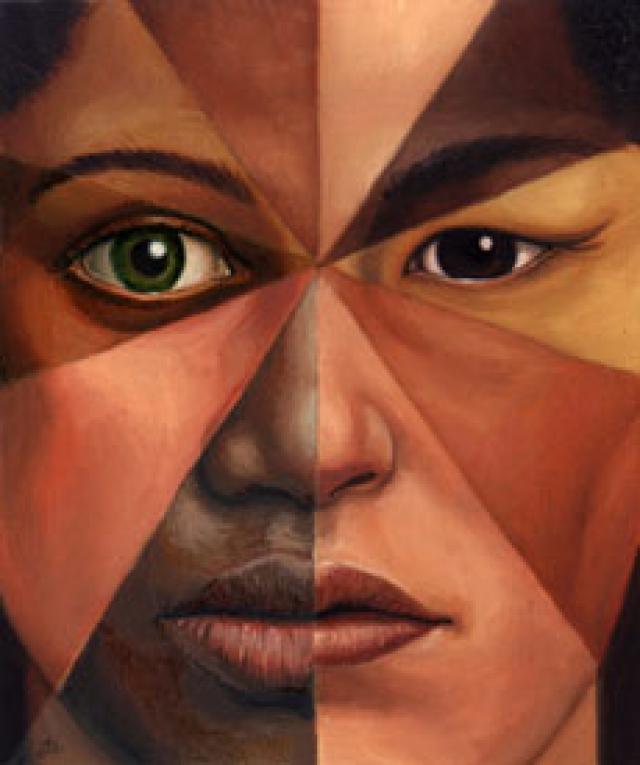 When my friend heard “it doesn’t matter because you’re my friend and that’s all I care about,” I heard “that it also doesn’t matter because I don’t really want care about anything that you may have or are still going through concerning racism.” Not choosing to see race or racism and doesn’t mean that it doesn’t exist, but it instead keeps the oppression of minorities going.
“Research has revealed that individuals endorsing color-blind racial attitudes had more difficulty communicating in cross-racial dyads; these individuals also inaccurately underestimate the frequency of both blatant and subtle racism in society…Helen Neville and Eduardo Bonilla-Silva [also] argue that ‘color blind racial attitudes’ constitute the major form for perpetuating modern racism. We can all agree that race ‘should not’ matter, but the ‘does’ not matter component is problematic for several reasons. First, whether we admit it or not most of us not only make presumptions of a person’s race based on their physical appearance, but according to research we also make it based on tone of voice as well as based on someone’s name.”
And I know that race shouldn’t matter, but it does matter, just as your gender, sexuality, religion, etc. shouldn’t either. Those people in the minority still face prejudices regardless of whether you choose to see race or not. However, personally acknowledging that it does exist and not dismissing those who may be facing prejudice and oppression is step in the right direction toward ending prejudices.
I do want to point out that it still a good thing to see the value in someone regardless of what they look, act, think or identify as. Seeing that person for who they truly are is wonderful, but dismissing people’s experiences with race, denying your privilege, ignoring the place that race has in shaping our identities, or letting inequality go unchecked isn’t the best way to get rid of bigotry.


 Jasmine in the wild
Leave a reply to meldrm Cancel reply